country
Cape Verde
Ten islands, one aching song, and the voice that carried it worldwide.
Listen through Cape Verde
5 defining tracks in the order they were released, from 1988 to 2021, each with a line on why it matters.
Preview: plays 5 of 15 tracks.
30-second previews, streamed from Apple.
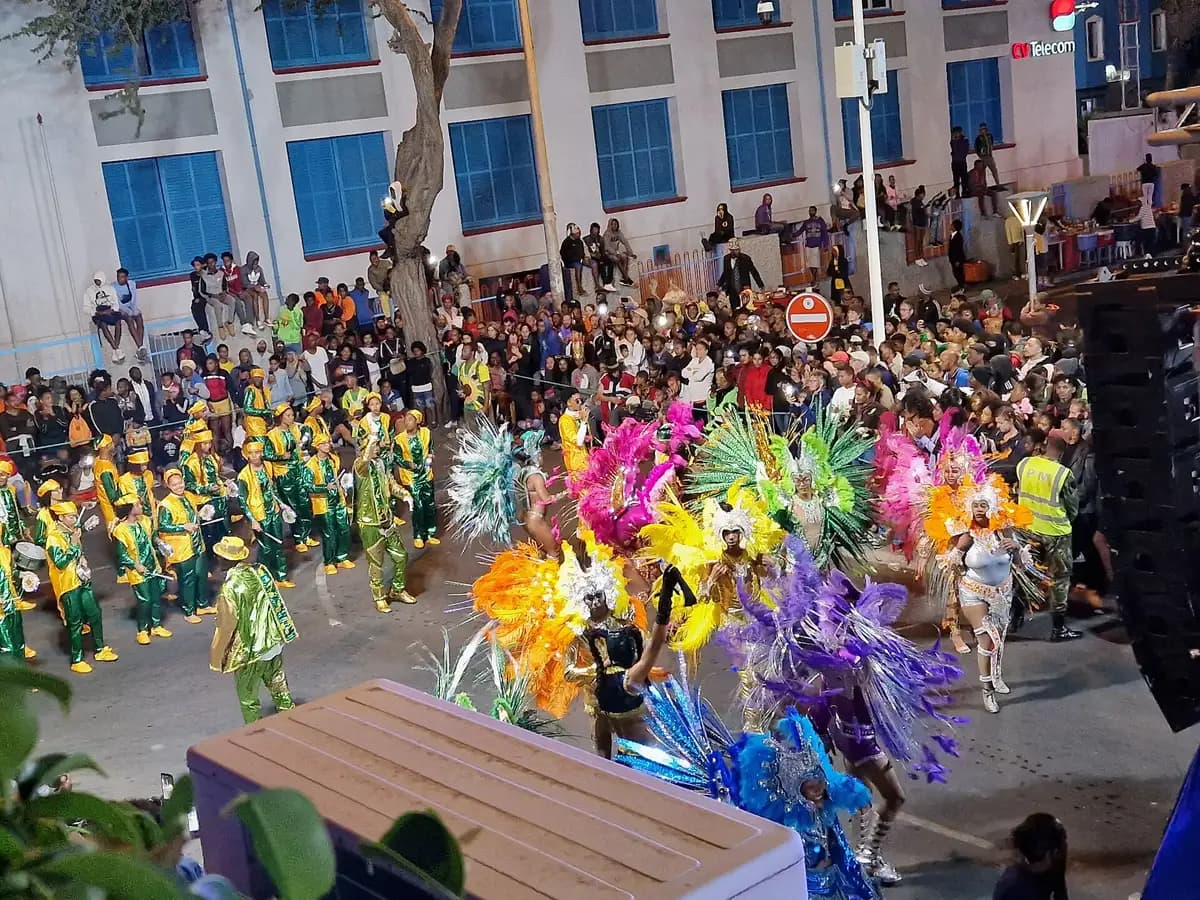
Cape Verde turns a half-million people scattered across ten Atlantic islands into one of the world's richest song cultures. Its heart is morna, the slow lament of sodade and the sea that UNESCO recognized in 2019 and that Cesária Évora sang to global fame. Around it spin the upbeat coladeira, the defiant accordion funaná of Santiago, the ancient women's percussion of batuku, and the diaspora dance-pop of cola-zouk. A new Kriolu-singing generation from Mayra Andrade to Dino d'Santiago now carries it all into the streaming age.
Frequently Asked Questions
What music is Cape Verde known for?+
Cape Verde is best known for morna, the slow, melancholic national song form built on sodade, a Kriolu word for longing. UNESCO recognized morna as Intangible Cultural Heritage in 2019, and Cesária Évora carried it to global fame. The islands also gave rise to the upbeat coladeira, the accordion-driven funaná of Santiago, the women's percussion tradition batuku, and the diaspora dance-pop cola-zouk.
Who was Cesaria Evora?+
Cesária Évora, known as the Barefoot Diva for performing without shoes, was Cape Verde's most famous singer and one of the great voices of world music. From São Vicente, she achieved international stardom in the 1990s with mornas and coladeiras like Sodade, won a Grammy in 2004, and became the face of Cape Verdean music worldwide until her death in 2011.
What is sodade?+
Sodade (also spelled saudade) is the Cape Verdean Creole word for a deep, bittersweet longing, often for home, absent loved ones, or emigrants who left the islands. It is the emotional core of morna, and the song Sodade, popularized by Cesária Évora, is its most famous expression. The feeling reflects Cape Verde's history of emigration and separation across the Atlantic diaspora.
What is funaná music?+
Funaná is a fast, driving dance music from Santiago island, played on the gaita accordion and the ferrinho, a scraped iron bar. It was marginalized and effectively suppressed during colonial rule, then surged into national pride after independence in 1975 when bands like Bulimundo electrified it. Today it remains Cape Verde's most energetic dance genre, carried forward by artists like Ferro Gaita and Elida Almeida.
Who are Cape Verde's most important modern musicians?+
Beyond the late Cesária Évora, leading names include Tito Paris and Bana, who anchored the classic morna and coladeira tradition, and a diaspora dance-pop wave led by Suzanna Lubrano and Gil Semedo. The contemporary Kriolu-singing generation is headed by Mayra Andrade, the late Sara Tavares, funaná star Elida Almeida, and the genre-blending Dino d'Santiago.
Last reviewed: 2026-07
The Story Behind
The stories behind Cape Verde's defining songs
Sodade
Cesária Évora
Sodade was already decades old when Cesária Évora made it famous. Armando Zeferino Soares wrote it in the 1950s, and its title is the Cape Verdean Creole form of the Portuguese saudade,…
Read the storyFebri Funaná
Bulimundo
For most of its history funaná was treated as music not fit for the capital. Built on the diatonic accordion, called gaita, and the ferrinho, a metal strip scraped with a knife, it came…
Read the storySources & References
- 1Morna, musical practice of Cabo Verde — UNESCO Intangible Cultural Heritage, 2019
- 2Batuko: A Musical Tradition of the Cape Verdean Islands — Susan Hurley-Glowa, 2021Book
- 3Cesaria Evora obituary — The Guardian, 2011
- 4Cesária Évora — Wikipedia, 2026
- 5Music of Cape Verde — Wikipedia, 2026
Further Reading
About This Article
This page is based on documented music history, artist biographies, chart data, award records, and cross-referenced sources from music journalism and academic research.
Curated by the timeline.music editorial team.
▸Read the timeline as text
The sound of Cape Verde, decade by decade: 6 genres and 25 artists, from the 1960s to the 2020s.
- 1960s
- Morna with Bana and Travadinha.
- 1970s
- Morna with Bana, Travadinha and Ildo Lobo; Coladeira with Ildo Lobo and Os Tubarões; Funaná with Os Tubarões and Bulimundo.
- 1980s
- Morna with Bana, Travadinha, Ildo Lobo, Cesária Évora and Hermínia; Coladeira with Cesária Évora, Tito Paris, Ildo Lobo, Os Tubarões and Hermínia; Funaná with Os Tubarões and Bulimundo; Batuku with Finaçon.
- 1990s
- Morna with Bana, Ildo Lobo, Cesária Évora and Hermínia; Coladeira with Cesária Évora, Tito Paris, Ildo Lobo, Os Tubarões, Hermínia and Simentera; Funaná with Codé di Dona, Bulimundo, Ferro Gaita and Bitori; Batuku with Finaçon and Simentera; Cola-zouk with Suzanna Lubrano, Gil Semedo and Grace Evora.
- 2000s
- Morna with Bana, Ildo Lobo, Cesária Évora, Nancy Vieira and Hermínia; Coladeira with Cesária Évora, Tito Paris, Ildo Lobo, Hermínia and Simentera; Funaná with Codé di Dona, Ferro Gaita and Bitori; Batuku with Finaçon, Lura, Simentera and Tcheka; Cola-zouk with Suzanna Lubrano, Gil Semedo, Grace Evora and Nelson Freitas; Crioulo Pop with Mayra Andrade and Sara Tavares.
- 2010s
- Morna with Cesária Évora and Nancy Vieira; Coladeira with Cesária Évora and Tito Paris; Funaná with Ferro Gaita, Elida Almeida and Bitori; Batuku with Lura, Elida Almeida and Tcheka; Cola-zouk with Suzanna Lubrano, Gil Semedo, Grace Evora, Djodje and Nelson Freitas; Crioulo Pop with Mayra Andrade, Sara Tavares and Dino d'Santiago.
- 2020s
- Funaná with Elida Almeida; Batuku with Lura and Elida Almeida; Cola-zouk with Djodje and Nelson Freitas; Crioulo Pop with Dino d'Santiago.
The Hitlist
The defining tracks from this region
Preview: 5 of 15 tracks
Sodade
Cesária ÉvoraCesária Évora was the Barefoot Diva, the voice that carried Cape Verde to the world. Singing morna and coladeira in Kriolu, she performed shoeless in solidarity with the poor of her native Mindelo. International fame came late, in her fifties, but her 1992 album Miss Perfumado and its song Sodade made her one of the most recognizable voices in world music. She won a Grammy in 2004, and her death in 2011 prompted national mourning across Cape Verde.