country
Greece
From rebetiko's soul to Zorba's dance. Millennia of music
Listen through Greece
5 defining tracks in the order they were released, from 1960 to 2005, each with a line on why it matters.
Preview: plays 5 of 10 tracks.
30-second previews, streamed from Apple.
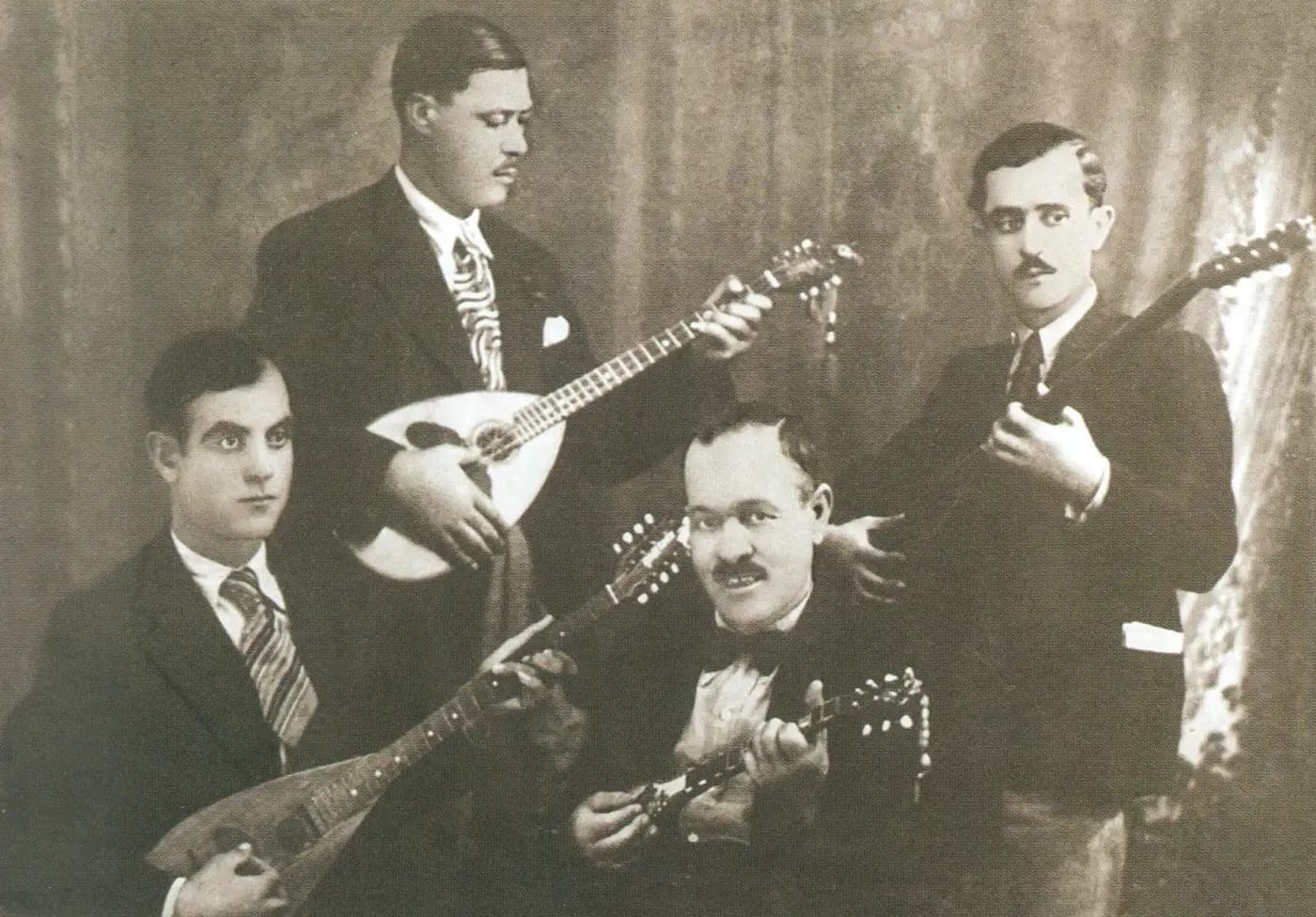
Greece's modern musical identity emerged from the rebetiko underground of the 1920s, when refugees from Asia Minor brought the bouzouki to the ports of Piraeus and Thessaloniki. Composers Theodorakis and Hadjidakis elevated these roots into entechno art song in the 1960s, winning an Oscar and global recognition. From laiko's emotional power to electronic pioneers like Vangelis and Eurovision triumphs, Greek music continues to reinvent itself while honoring a deep Mediterranean tradition.
Frequently Asked Questions
What is the most popular music genre in Greece?+
Laiko, the Greek popular music tradition rooted in rebetiko, has been Greece's dominant genre since the 1960s. Modern laiko blends bouzouki-driven melodies with contemporary pop production and remains the mainstream sound in Greek nightclubs and radio. Greek pop and electronic music also have significant followings.
Last reviewed: 2026-03
What is rebetiko music and why is it important?+
Rebetiko is Greece's urban folk music, often called the 'Greek blues.' It emerged in the 1920s among refugees from Asia Minor and the working class of port cities like Piraeus. Characterized by the bouzouki and emotionally raw vocals, rebetiko deals with themes of exile, poverty, and love. It was inscribed on UNESCO's Intangible Cultural Heritage list in 2017 and forms the foundation of all modern Greek popular music.
Who are the most influential Greek musicians of all time?+
Mikis Theodorakis and Manos Hadjidakis are widely considered the two most influential Greek composers, having created the entechno movement and brought Greek music to global audiences through Oscar-winning film scores. Markos Vamvakaris is revered as the patriarch of rebetiko, while Stelios Kazantzidis defined the laiko genre. In contemporary music, Vangelis revolutionized electronic and film scoring, and Nana Mouskouri became the best-selling female recording artist in history.
What Greek songs should I listen to first?+
Start with 'Zorba's Dance' by Mikis Theodorakis for the iconic sirtaki, then 'Synnefiasmeni Kyriaki' by Vassilis Tsitsanis for the soul of rebetiko. 'Ta Pedia tou Pirea' from the film Never on Sunday showcases the golden age of entechno, while Vangelis's 'Chariots of Fire' demonstrates Greece's contribution to electronic music. For modern Greek pop, Helena Paparizou's Eurovision-winning 'My Number One' is essential.
Last reviewed: 2026-03
Has Greece won the Eurovision Song Contest?+
Yes, Greece won Eurovision in 2005 when Helena Paparizou performed 'My Number One' in Kyiv, Ukraine. The song scored 230 points and received the maximum 12 points from ten countries. Greece has participated in Eurovision since 1974, when Marinella became the first Greek entrant. Sakis Rouvas also represented Greece twice, finishing third in 2004 with 'Shake It.'
The Story Behind
The stories behind Greece's defining songs
Zorba's Dance
Mikis Theodorakis
The music that the world now hears as timeless Greek folk dance was written for a film. Mikis Theodorakis composed "Zorba's Dance" for Michael Cacoyannis's 1964 Zorba the Greek, in which…
Read the storySynnefiasmeni Kyriaki
Vassilis Tsitsanis
Vassilis Tsitsanis began "Synnefiasmeni Kyriaki", Cloudy Sunday, in Thessaloniki during the German occupation, when the authorities considered rebetiko degenerate and he played to small…
Read the storyFrangosyriani
Markos Vamvakaris
In 1935 Markos Vamvakaris went home to Syros for the first time in almost twenty years. He brought along the musician Batis, his younger brother and the pianist Robertakis, and played a…
Read the storySources & References
- 1Road to Rembetika: Music of a Greek Sub-Culture — Gail Holst, 1975Book
- 2The Sound of Greece: Mikis Theodorakis and Manos Hadjidakis — Stathis Gauntlett, 1994
- 3Songs of the Greek Underground: Rebetika — Elias Petropoulos, 2000Book
- 4Music of Greece — Wikipedia Contributors, 2026
- 5BBC: Rebetiko. The blues of Greece — BBC, 2018
- 6Greek National Discography: 1920-2000 — Greek Record Industry, 2005
Further Reading
About This Article
This page is based on documented Greek music history, Greek discography records, Eurovision competition history, and cross-referenced sources from Greek music journalism and academic studies of rebetiko, entechno, and laiko traditions.
Curated by the timeline.music editorial team. Every YouTube ID on this page has been verified live against the original recording.
▸Read the timeline as text
The sound of Greece, decade by decade: 5 genres and 24 artists, from the 1920s to the 2020s.
- 1920s
- Rebetiko with Vamvakaris.
- 1930s
- Rebetiko with Vamvakaris and Tsitsanis.
- 1940s
- Rebetiko with Vamvakaris and Tsitsanis.
- 1950s
- Rebetiko with Vamvakaris and Tsitsanis; Entechno with Hadjidakis, Theodorakis and Bithikotsis; Laïko with Kazantzidis and Marinella.
- 1960s
- Rebetiko with Vamvakaris and Tsitsanis; Entechno with Hadjidakis, Theodorakis, Bithikotsis and Mouskouri; Laïko with Kazantzidis and Marinella.
- 1970s
- Entechno with Hadjidakis, Theodorakis, Bithikotsis and Mouskouri; Laïko with Kazantzidis, Marinella, Dalaras and Alexiou; Electronic with Vangelis; Greek Pop with Roussos.
- 1980s
- Entechno with Hadjidakis, Theodorakis and Mouskouri; Laïko with Kazantzidis, Marinella, Dalaras, Alexiou and Arvanitaki; Electronic with Vangelis and Yanni; Greek Pop with Roussos.
- 1990s
- Laïko with Kazantzidis, Marinella, Dalaras, Alexiou, Arvanitaki and Mazonakis; Electronic with Vangelis and Yanni; Greek Pop with Roussos, Rouvas and Vandi.
- 2000s
- Laïko with Marinella, Dalaras, Alexiou, Arvanitaki and Mazonakis; Electronic with Vangelis and Yanni; Greek Pop with Roussos, Rouvas, Paparizou and Vandi.
The Hitlist
The defining tracks from this region
Preview: 5 of 10 tracks
Zorba's Dance
Mikis TheodorakisGreece's most celebrated composer, Theodorakis created over 1,000 works spanning film scores, symphonies, and song cycles. His 'Zorba's Dance' from the 1964 film became the most recognized Greek melody worldwide. Imprisoned and exiled by the military junta for his political activism, his banned music became a symbol of resistance and Greek identity.