country
Peru
Criollo waltzes, Afro-Peruvian cajón, and the psychedelic cumbia of the Andes.
Listen through Peru
5 defining tracks in the order they were released, from 1950 to 1995, each with a line on why it matters.
Preview: plays 5 of 15 tracks.
30-second previews, streamed from Apple.
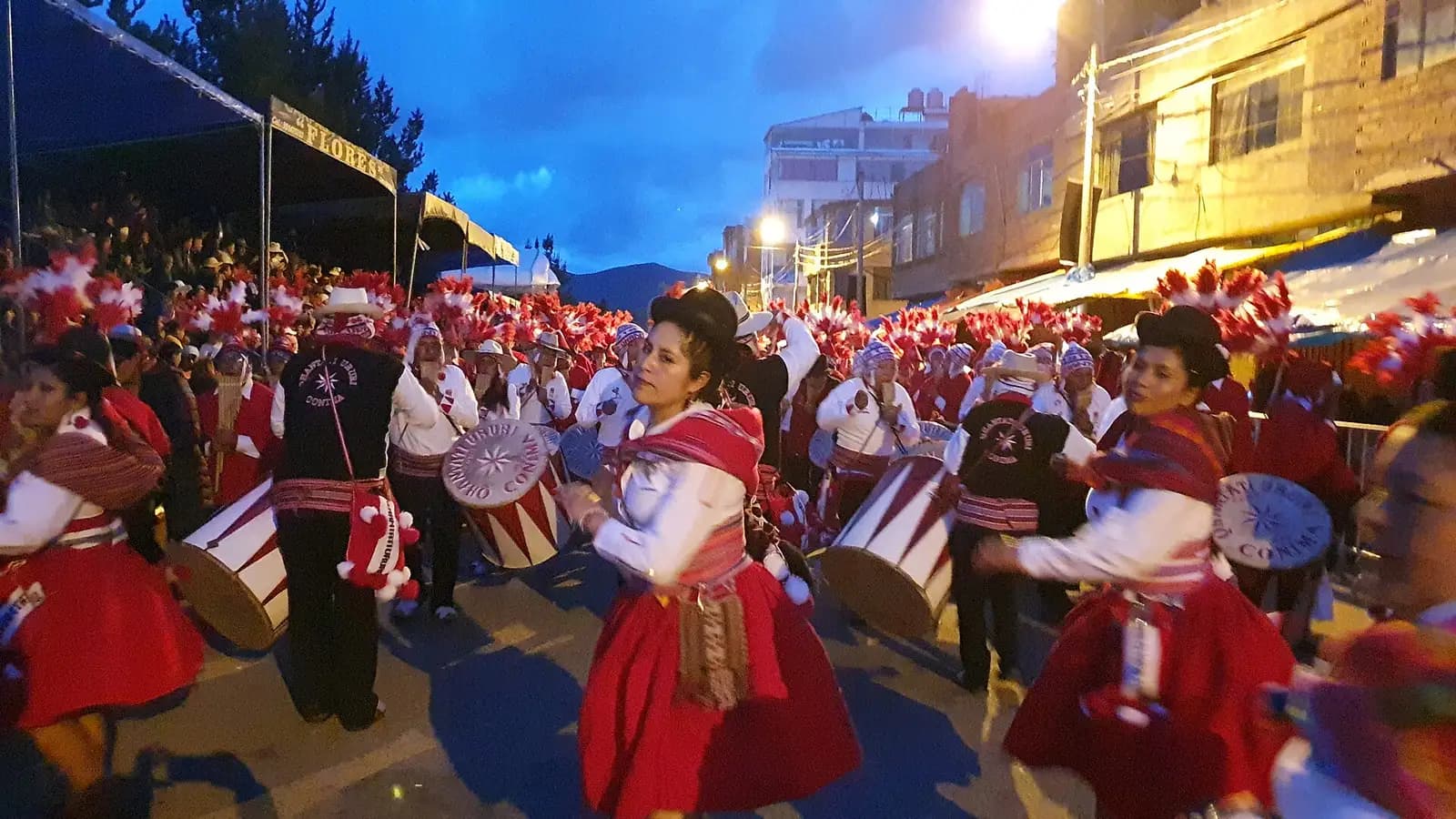
Peru's music is a meeting of three worlds: the Spanish-rooted vals criollo of coastal Lima, the cajón-driven rhythms of its Afro-descendant communities, and the huayno melodies of the Quechua highlands. In the cities these currents collided to create chicha, a psychedelic cumbia that became the sound of Andean migration and, decades later, a global obsession. From the otherworldly soprano of Yma Sumac to Grammy winner Susana Baca and the garage rock of Los Saicos, Peru's catalog is one of Latin America's richest and most distinctive.
Frequently Asked Questions
What is Peru's most famous music?+
Peru is known for three great traditions: música criolla, the romantic coastal waltz style built around guitar and cajón; Afro-Peruvian music, revived by artists like Susana Baca and Eva Ayllón; and chicha, the psychedelic Peruvian cumbia. The country also produced the globally famous soprano Yma Sumac and one of Latin America's earliest garage rock scenes.
What is chicha music?+
Chicha is Peruvian psychedelic cumbia, which emerged in the 1960s when coastal and Amazonian bands blended Colombian cumbia with surf-guitar, Andean huayno melodies, and Cuban son. Groups like Los Destellos, Los Mirlos, and Juaneco y su Combo made it the soundtrack of Andean migration to the cities, and its hypnotic guitar sound later found a devoted global following.
What is the cajón and where is it from?+
The cajón is a wooden box drum that the player sits on and strikes with the hands, and it was created by enslaved Africans in coastal Peru. It is the heartbeat of Afro-Peruvian music and has since been adopted worldwide, most notably in flamenco. In 2001 Peru officially declared it part of the national cultural heritage.
Who is the most famous Peruvian singer?+
Internationally, the coloratura soprano Yma Sumac remains Peru's most globally famous voice, celebrated for her extraordinary range. Within Peru, Chabuca Granda is revered as the queen of música criolla, and Susana Baca won two Latin Grammys and served as Peru's Minister of Culture. Eva Ayllón is among the most beloved living Afro-Peruvian singers.
What languages is Peruvian music sung in?+
Most Peruvian popular music is sung in Spanish, but Quechua, the main Indigenous Andean language, is central to huayno and highland traditions. Bands like Uchpa perform blues and rock in Quechua, and the language appears in music across the Andes. Aymara and Amazonian languages also feature in regional styles.
The Story Behind
The stories behind Peru's defining songs
La Flor de la Canela
Chabuca Granda
Chabuca Granda recorded 7 January 1950 as the date she finished "La flor de la canela", and she gave it its first performance on 21 July that year, her birthday. The waltz was inspired by…
Read the storyDemolición
Los Saicos
For a record-cover photo shoot, the members of Los Saicos once carried a sledgehammer, an axe and fake dynamite to a railway station, and were detained by the police for it. The band had…
Read the storySoy Provinciano
Chacalón
"Soy provinciano" was written for a film that was never made. The composer, arranger and bassist Juan Rebaza Cárdenas created words and music for the soundtrack of a planned movie about…
Read the storySources & References
- 1The Peru Reader: History, Culture, Politics — Orin Starn, Iván Degregori & Robin Kirk (eds.), 2005Book
- 2Exploring The Roots Of Peruvian Chicha Music — NPR (Banning Eyre), 2007
- 3Susana Baca: the sensuous voice of Afro-Peruvians — The Seattle Times, 2004
- 4Música criolla — Wikipedia, 2026
- 5Chicha (music) — Wikipedia, 2026
- 6Music of Peru — Wikipedia, 2026
Further Reading
About This Article
This page is based on documented music history, artist biographies, chart data, award records, and cross-referenced sources from music journalism and academic research.
Curated by the timeline.music editorial team.
▸Read the timeline as text
The sound of Peru, decade by decade: 5 genres and 18 artists, from the 1950s to the 2020s.
- 1950s
- Música Criolla with Los Morochucos and Chabuca Granda; Andean with Yma Sumac and Picaflor de los Andes.
- 1960s
- Música Criolla with Los Morochucos, Chabuca Granda and Lucha Reyes; Andean with Yma Sumac and Picaflor de los Andes; Chicha with Los Destellos; Peruvian Rock with Los Saicos.
- 1970s
- Música Criolla with Los Morochucos, Chabuca Granda and Lucha Reyes; Afro-Peruvian with Perú Negro; Andean with Yma Sumac and Picaflor de los Andes; Chicha with Los Destellos, Los Mirlos, Juaneco y su Combo and Chacalón.
- 1980s
- Música Criolla with Chabuca Granda and Eva Ayllón; Afro-Peruvian with Perú Negro and Eva Ayllón; Chicha with Los Destellos, Los Mirlos, Juaneco y su Combo, Chacalón and Los Shapis; Peruvian Rock with Frágil.
- 1990s
- Música Criolla with Eva Ayllón; Afro-Peruvian with Perú Negro, Susana Baca and Eva Ayllón; Andean with Uchpa; Chicha with Los Mirlos, Juaneco y su Combo, Chacalón, Los Shapis and Corazón Serrano; Peruvian Rock with Frágil, Uchpa and Gian Marco.
- 2000s
- Música Criolla with Eva Ayllón; Afro-Peruvian with Perú Negro, Susana Baca and Eva Ayllón; Andean with Uchpa; Chicha with Los Mirlos, Los Shapis and Corazón Serrano; Peruvian Rock with Frágil, Uchpa and Gian Marco.
- 2010s
- Música Criolla with Eva Ayllón; Afro-Peruvian with Perú Negro, Susana Baca and Eva Ayllón; Andean with Uchpa; Chicha with Corazón Serrano; Peruvian Rock with Frágil, Uchpa and Gian Marco.
- 2020s
- Chicha with Corazón Serrano; Peruvian Rock with Gian Marco.
The Hitlist
The defining tracks from this region
Preview: 5 of 15 tracks
Sonido Amazónico
Los MirlosLos Mirlos are the great ambassadors of cumbia amazónica, the jungle strain of Peruvian chicha. Formed by the Rodríguez brothers from the Amazon town of Moyobamba, they built a hypnotic sound around slithering, tremolo-drenched guitars evoking the rainforest. Their 1973 instrumental Sonido Amazónico became the genre's signature anthem and, decades later, an international cult favorite that keeps them touring the world.