country
United States
A listening introduction to American blues, jazz, country, soul, rock, pop, hip-hop, and electronic music
Listen through United States
5 defining tracks in the order they were released, from 1958 to 1983, each with a line on why it matters.
Preview: plays 5 of 20 tracks.
30-second previews, streamed from Apple.
American popular music has grown through exchanges among communities, regions, and traditions. African American musicians are central to the histories of blues, jazz, gospel, R&B, soul, funk, rock and roll, hip-hop, house, and techno. Country and folk draw on overlapping Black and European American traditions, while Indigenous, Latino, Caribbean, and immigrant communities are essential to the wider musical story. This page offers a selective introduction to recorded popular music, rather than a complete national history. The first ten tracks balance musical styles and historical influence; their order is a listening sequence, not a ranking of artistic greatness. Explore the remaining selections for additional perspectives.
Moments
The moments United States's music history turned on
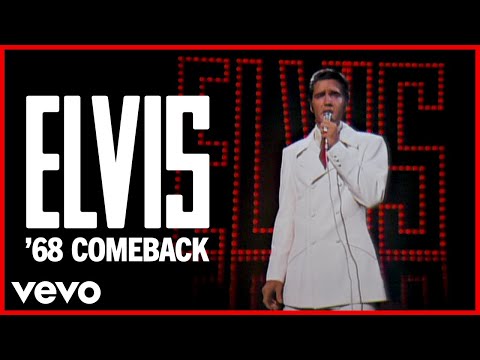
The night Elvis put the leather back on
After seven years of bad films and no live shows, Elvis Presley sat down in a black leather suit in front of a small studio audience and reminded America why it had been frightened of him in 1956.

Three nights in Kinshasa before the Rumble in the Jungle
James Brown, Celia Cruz with the Fania All Stars, Franco and Tabu Ley shared one stadium stage in September 1974. The fight they had come to warm up was postponed by six weeks; the music happened anyway.
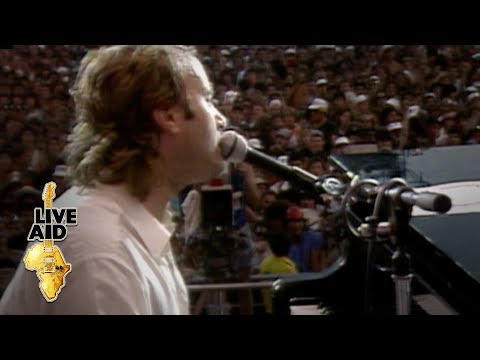
The drummer who played both Live Aids in one day
Phil Collins sang In the Air Tonight at Wembley in the afternoon, boarded Concorde, and sang it again in Philadelphia the same night, then sat behind the drums for Led Zeppelin.
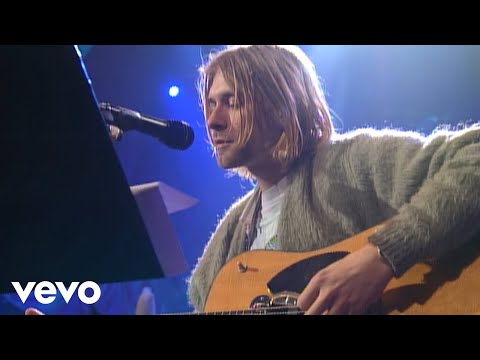
Nirvana light the candles and play a funeral
Kurt Cobain asked for stargazer lilies and black candles on the MTV Unplugged stage. Five months later the closing song, a Lead Belly blues, was being replayed as his epitaph.

Old men from Havana take a bow at Carnegie Hall
Compay Segundo was ninety. Ibrahim Ferrer had been shining shoes three years earlier. On 1 July 1998 the Buena Vista Social Club played New York, and Wim Wenders' cameras caught them looking up at the balconies.
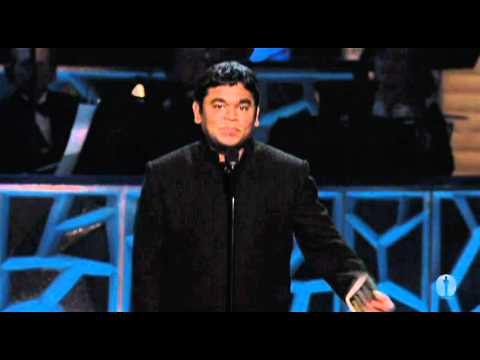
A.R. Rahman wins two Oscars in one night and thanks God in Tamil
On 22 February 2009 the composer from Chennai walked to the Kodak Theatre stage twice, for the score and for the song Jai Ho. "Ella pugazhum iraivanukke," he said. All praise to God.

Aretha drops the fur coat and a president wipes his eyes
Asked to sing (You Make Me Feel Like) A Natural Woman for its co-writer Carole King, the 73-year-old Aretha Franklin sat at the piano, built the song from nothing, and let the coat fall to the floor.

BTS tell the United Nations to speak yourself
On 24 September 2018 seven young men from Seoul stood at a lectern in the UN General Assembly building, and RM spoke for seven minutes about a boy from Ilsan who learned to love himself.
Frequently Asked Questions
What is the most popular music genre in the United States?+
Hip-hop and R&B have been the most consumed genres in the United States since 2017, when they overtook rock in streaming and sales according to Nielsen and Luminate. Country is the most popular radio format, and pop stars such as Taylor Swift and Beyoncé dominate album sales. Rock remains the biggest catalogue genre.
Last reviewed: 2026-09
Where did the blues come from?+
The blues emerged around 1900 in the Mississippi Delta from African American work songs, spirituals, and field hollers. Robert Johnson's 1936 and 1937 recordings became its most mythologised documents, and after the Great Migration, Muddy Waters and Howlin' Wolf electrified it in Chicago. The blues is the root of rock and roll, soul, and much of jazz.
Who invented hip-hop?+
Hip-hop was born at block parties in the Bronx, New York, in the early 1970s. DJ Kool Herc is credited with isolating the breakbeat in 1973, Grandmaster Flash developed cutting and scratching, and the Sugarhill Gang's Rapper's Delight in 1979 became the first rap hit. Grandmaster Flash and the Furious Five's The Message in 1982 showed that rap could carry social commentary.
Who is the best-selling American musician of all time?+
Elvis Presley and Michael Jackson are generally cited as the best-selling American artists, each with sales estimated at 500 million records or more. Michael Jackson's Thriller remains the best-selling album in history. Among living artists, Taylor Swift and Beyoncé lead the streaming era, and Garth Brooks holds the record for most certified album sales by a solo artist in the United States.
Last reviewed: 2026-09
What is the connection between Detroit and techno?+
Techno was invented in Detroit and its suburbs in the early 1980s by Juan Atkins, Derrick May, and Kevin Saunderson, known as the Belleville Three. They fused Kraftwerk's electronics with funk and the industrial atmosphere of the Motor City, and Model 500's No UFO's and Rhythim Is Rhythim's Strings of Life became the genre's founding records. Detroit techno found its largest audience in Berlin and other European cities.
The Story Behind
The stories behind United States's defining songs
Respect
Aretha Franklin
Aretha Franklin cut "Respect" in New York on Valentine's Day, 1967, but the song had started life as Otis Redding's. His 1965 version was a man's demand to be treated well when he came home…
Read the storyJolene
Dolly Parton
Onstage in 1988, Dolly Parton told her audience that "Jolene" was based on a true story, which was why she did not like to sing it too often. As she has told it, a red-headed bank clerk…
Read the storyAlright
Kendrick Lamar
Pharrell Williams built the beat in 2014 with another rapper, Fabolous, in mind. Kendrick Lamar started writing to it as soon as he heard it, but at first felt it did not sit well with the…
Read the storyRing of Fire
Johnny Cash
The spark, some sources say, was a single underlined line in an Elizabethan poetry book owned by June Carter's uncle, A. P. Carter, comparing love to a burning ring of fire. June took the…
Read the storySources & References
- 1The History of Jazz — Ted Gioia, 1997Book
- 2Deep Blues: A Musical and Cultural History of the Mississippi Delta — Robert Palmer, 1981Book
- 3Can't Stop Won't Stop: A History of the Hip-Hop Generation — Jeff Chang, 2005Book
- 4The 500 Greatest Songs of All Time — Rolling Stone, 2024
- 5Rock and Roll Hall of Fame Inductees — Rock and Roll Hall of Fame, 2025
- 6Music of the United States — Wikipedia, 2025
Further Reading
About This Article
A listening guide selected for musical distinctiveness, historical influence, accessibility, and balance across eras and styles. The first ten tracks are a listening sequence, not an objective ranking. Yearly selections are editorial picks from 2017 to 2024, not annual chart winners. Timeline entries show selected periods represented by this guide, not complete career dates; lane boundaries describe this selection, not a genre's birth or end. Track-level references support further checking; the general bibliography is further reading, not evidence that every claim has been independently verified.
Curated by the timeline.music editorial team. Every YouTube ID on this page was verified against the original recording on 5 September 2026.
▸Read the timeline as text
The sound of United States, decade by decade: 9 genres and 52 artists, from the 1920s to the 2020s.
- 1920s
- Jazz with Louis Armstrong and Duke Ellington.
- 1930s
- Blues with Robert Johnson; Jazz with Louis Armstrong, Duke Ellington and Ella Fitzgerald; American Folk with Woody Guthrie.
- 1940s
- Blues with Muddy Waters; Jazz with Louis Armstrong, Duke Ellington, Ella Fitzgerald, Charlie Parker and Miles Davis; Country with Hank Williams; American Folk with Woody Guthrie; Pop with Frank Sinatra.
- 1950s
- Blues with Muddy Waters, Howlin' Wolf and B.B. King; Jazz with Louis Armstrong, Duke Ellington, Ella Fitzgerald, Charlie Parker, Miles Davis, John Coltrane and Nina Simone; Country with Hank Williams and Johnny Cash; American Folk with Woody Guthrie; Soul & Funk with Ray Charles, James Brown and Nina Simone; Rock with Chuck Berry and Elvis Presley; Pop with Frank Sinatra.
- 1960s
- Blues with Muddy Waters, Howlin' Wolf and B.B. King; Jazz with Louis Armstrong, Duke Ellington, Ella Fitzgerald, Miles Davis, John Coltrane and Nina Simone; Country with Johnny Cash, Dolly Parton and Willie Nelson; American Folk with Bob Dylan and Simon & Garfunkel; Soul & Funk with Ray Charles, James Brown, Nina Simone, Aretha Franklin, Marvin Gaye and Stevie Wonder; Rock with Chuck Berry, Elvis Presley, The Beach Boys, Jimi Hendrix and Bob Dylan; Pop with Frank Sinatra.
- 1970s
- Blues with Muddy Waters, Howlin' Wolf and B.B. King; Jazz with Louis Armstrong, Duke Ellington, Ella Fitzgerald and Miles Davis; Country with Johnny Cash, Dolly Parton and Willie Nelson; American Folk with Bob Dylan and Simon & Garfunkel; Soul & Funk with Ray Charles, James Brown, Nina Simone, Aretha Franklin, Marvin Gaye and Stevie Wonder; Rock with Chuck Berry, Elvis Presley, The Beach Boys, Bob Dylan and Bruce Springsteen; Pop with Frank Sinatra, Michael Jackson and Prince; Hip-Hop with Grandmaster Flash and the Furious Five.
- 1980s
- Blues with Muddy Waters and B.B. King; Jazz with Ella Fitzgerald and Miles Davis; Country with Johnny Cash, Dolly Parton and Willie Nelson; American Folk with Bob Dylan; Soul & Funk with Ray Charles, James Brown, Nina Simone, Aretha Franklin, Marvin Gaye, Stevie Wonder and Prince; Rock with Chuck Berry, The Beach Boys, Bruce Springsteen, Metallica and Nirvana; Pop with Frank Sinatra, Michael Jackson, Madonna and Prince; Hip-Hop with Grandmaster Flash and the Furious Five, Run-DMC and Public Enemy; Electronic with Frankie Knuckles, Juan Atkins and Derrick May.
- 1990s
- Blues with B.B. King; Jazz with Ella Fitzgerald and Miles Davis; Country with Johnny Cash, Dolly Parton and Willie Nelson; American Folk with Bob Dylan; Soul & Funk with Ray Charles, James Brown, Nina Simone, Aretha Franklin, Stevie Wonder and Prince; Rock with Chuck Berry, Bruce Springsteen, Metallica and Nirvana; Pop with Frank Sinatra, Michael Jackson, Madonna and Prince; Hip-Hop with Run-DMC, Public Enemy, 2Pac, The Notorious B.I.G., Missy Elliott and Jay-Z; Electronic with Frankie Knuckles, Juan Atkins and Derrick May.
- 2000s
- Blues with B.B. King; Country with Johnny Cash, Dolly Parton, Willie Nelson and Taylor Swift; American Folk with Bob Dylan; Soul & Funk with Ray Charles, James Brown, Aretha Franklin and Stevie Wonder; Rock with Chuck Berry, Bruce Springsteen and Metallica; Pop with Michael Jackson, Madonna, Prince, Beyoncé, Taylor Swift, Miley Cyrus and Lady Gaga; Hip-Hop with Public Enemy, Missy Elliott and Jay-Z; Electronic with Frankie Knuckles, Juan Atkins and Derrick May.
- 2010s
- Blues with B.B. King; Country with Dolly Parton, Willie Nelson, Taylor Swift and Morgan Wallen; American Folk with Bob Dylan; Soul & Funk with Aretha Franklin and Stevie Wonder; Rock with Chuck Berry, Bruce Springsteen and Metallica; Pop with Madonna, Prince, Beyoncé, Taylor Swift, Billie Eilish, Miley Cyrus and Lady Gaga; Hip-Hop with Public Enemy, Missy Elliott, Jay-Z, Kendrick Lamar and Cardi B; Electronic with Frankie Knuckles, Juan Atkins and Derrick May.
- 2020s
- Country with Dolly Parton, Willie Nelson and Morgan Wallen; American Folk with Bob Dylan; Soul & Funk with Stevie Wonder; Rock with Bruce Springsteen and Metallica; Pop with Beyoncé, Taylor Swift, Billie Eilish, Miley Cyrus and Lady Gaga; Hip-Hop with Kendrick Lamar and Cardi B.
The Hitlist
The defining tracks from this region
Preview: 5 of 20 tracks
Billie Jean
Michael JacksonMichael Jackson, the King of Pop, was a child star with the Jackson 5 before Off the Wall and Thriller made him the biggest entertainer on earth. Thriller remains the best-selling album of all time, and his videos and moonwalk defined the MTV era. His later life was marked by controversy, but his music's global reach is unmatched.