country
Japan
Eight decades of pop, from Misora Hibari to YOASOBI
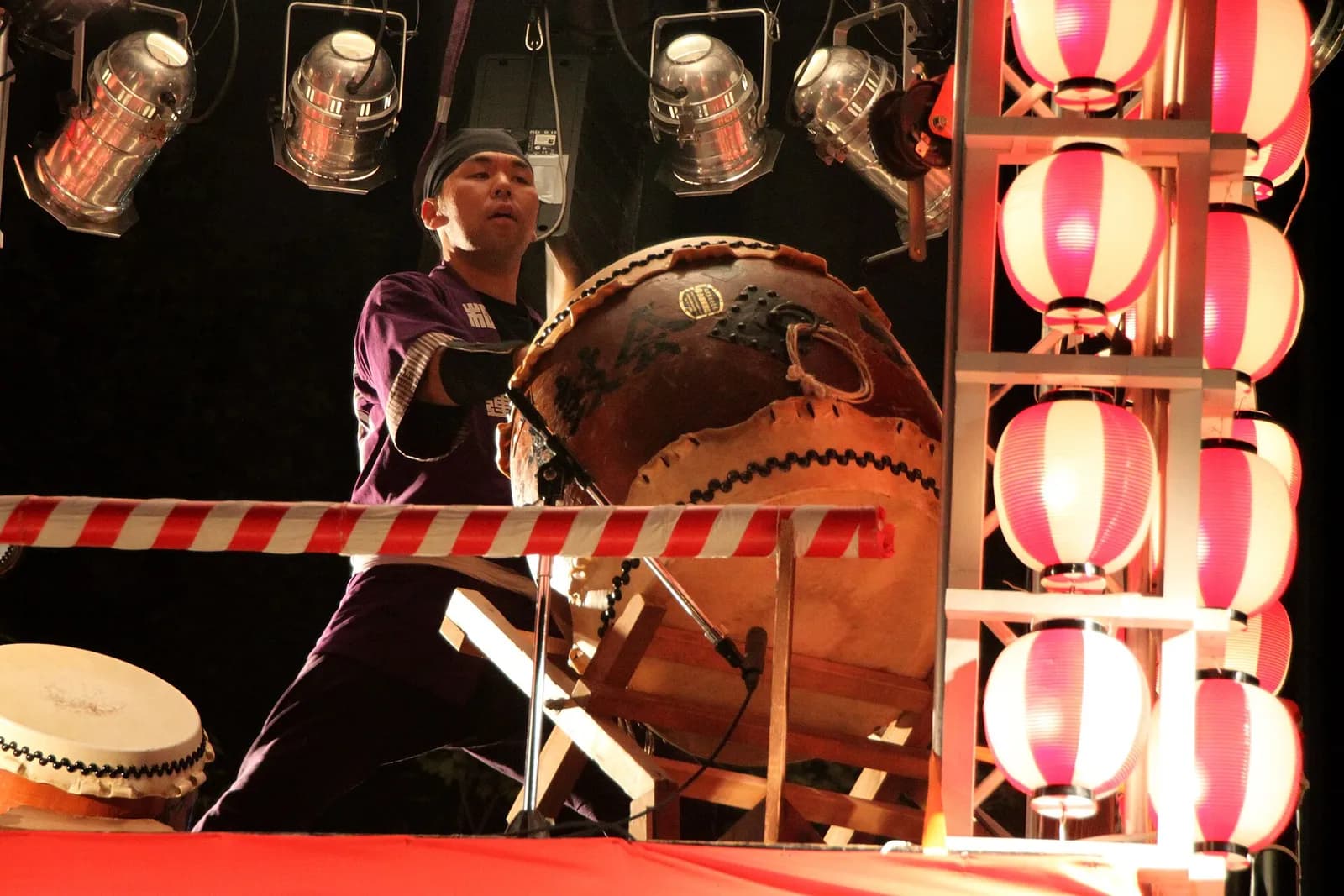
Photo: MIKI Yoshihito from Sapporo City, Hokkaido, JAPAN / CC BY 2.0
Listen through Japan
5 defining tracks in the order they were released, from 1961 to 2000, each with a line on why it matters.
Preview: plays 5 of 16 tracks.
30-second previews, streamed from Apple.
Japanese popular music starts with enka and the postwar dominance of Misora Hibari, then runs through the kayōkyoku idol era of the 1970s and 1980s, the city-pop boom of late-bubble Tokyo, and the synthpop invention of Yellow Magic Orchestra. The 1990s brought the rise of j-rock through X Japan, B'z, L'Arc-en-Ciel, and Mr. Children, and modern j-pop crystallised around Utada Hikaru's First Love. The 2010s and 2020s belong to Kenshi Yonezu and the YOASOBI generation, while the Okinawan tradition of shima uta runs as a parallel thread through The Boom and BEGIN.
Frequently Asked Questions
What is the most popular Japanese music genre?+
J-pop is Japan's mainstream popular music genre and has been since the late 1990s, when Utada Hikaru's debut album First Love kicked off the modern era. The current J-pop wave is led by Kenshi Yonezu, YOASOBI, and Ado, all of whom regularly top the domestic charts and increasingly the global anime-soundtrack circuits.
What is the difference between enka and J-pop?+
Enka is Japan's postwar sentimental ballad form, built on a pentatonic scale and the kobushi vocal vibrato, with lyrics about lost love, hometowns, and northern stations. J-pop is the modern Japanese mainstream pop tradition that succeeded the older kayōkyoku format in the 1990s, drawing on Western R&B, dance, and rock production. The two genres coexist: enka still draws huge television audiences for veteran singers like Ishikawa Sayuri.
What is city pop and why did it have a global revival?+
City pop is the sophisticated, urban Japanese pop of the late 1970s and 1980s, blending West Coast AOR, soft funk, Latin rhythms, and the gloss of brand-new digital production. Largely forgotten in Japan after the 1990s, the genre was rediscovered globally in 2018 when YouTube's recommendation algorithm pushed Mariya Takeuchi's 1984 song Plastic Love to millions of listeners, sparking a worldwide vinyl-reissue boom.
Who is the most famous Japanese musician?+
Misora Hibari is the singer most Japanese describe as the country's voice of the twentieth century. Her 1989 ballad Kawa no Nagare no Yō ni was voted the greatest Japanese song of all time in a 2007 nationwide poll. In commercial terms, the duo B'z have sold more records (over eighty million) than any other Japanese act, and Utada Hikaru's First Love is the country's best-selling album.
Is Okinawan music separate from Japanese music?+
Yes and no. Okinawan music is the distinct musical tradition of the Ryukyu Islands, built around the sanshin three-string lute and a unique pentatonic scale. The shima uta form carries the memory of Okinawan kingdoms and wartime suffering. Since the 1990s, mainland Japanese bands like The Boom and Okinawan groups like BEGIN have crossed Okinawan idioms into the Japanese pop mainstream, with Shima Uta and Nada Sōsō becoming national standards.
The Story Behind
The stories behind Japan's defining songs
Sukiyaki (Ue o Muite Arukou)
Kyu Sakamoto
The lyricist Rokusuke Ei wrote the words to Ue o Muite Arukō while walking home from the 1960 Anpo protests against the security treaty between Japan and the United States. The protests had…
Read the storyKawa no Nagare no Yō ni
Misora Hibari
The river in Kawa no Nagare no Yō ni is New York's East River. The lyricist Yasushi Akimoto was living in New York when he wrote the words in a café there, homesick and far from Japan. He…
Read the storyPlastic Love
Mariya Takeuchi
When Mariya Takeuchi made Variety in 1984, it was a comeback, and for the first time she wrote every song herself. She was pregnant during the sessions and has said she wrote simply because…
Read the storyShima Uta
The Boom
Kazufumi Miyazawa, singer of The Boom, went to Okinawa for a photo shoot and came back with a song. As he told fRoots in 2003, he visited the Himeyuri Peace Museum and learned about the…
Read the storySources & References
- 1Japanese Popular Music: Culture, Authenticity and Power — Carolyn Stevens, 2007Book
- 2Made in Japan: Studies in Popular Music — Toru Mitsui, 2014Book
- 3Why Japan's city pop is having a global moment — The Guardian, 2021
- 4Misora Hibari, the most cherished singer in Japan — BBC Culture, 2019
- 5How YOASOBI's 'Idol' became a global anime hit — Rolling Stone, 2023
- 6Music of Japan — Wikipedia, 2026
Further Reading
About This Article
This page is based on documented music history, artist biographies, recording histories, and cross-referenced sources from music journalism and academic research on Japanese music.
timeline.music editorial team
▸Read the timeline as text
The sound of Japan, decade by decade: 8 genres and 27 artists, from the 1940s to the 2020s.
- 1940s
- Enka with Misora Hibari.
- 1950s
- Enka with Misora Hibari.
- 1960s
- Enka with Misora Hibari; Kayōkyoku with Kyu Sakamoto.
- 1970s
- Enka with Misora Hibari and Ishikawa Sayuri; Kayōkyoku with Kyu Sakamoto, Yamaguchi Momoe and Pink Lady; City Pop with Tatsuro Yamashita; Japanese Electronic with Yellow Magic Orchestra and Ryuichi Sakamoto; J-Rock with Southern All Stars.
- 1980s
- Enka with Misora Hibari and Ishikawa Sayuri; Kayōkyoku with Kyu Sakamoto, Yamaguchi Momoe, Pink Lady, Matsuda Seiko and Akina Nakamori; City Pop with Tatsuro Yamashita, Mariya Takeuchi and Anri; Japanese Electronic with Yellow Magic Orchestra and Ryuichi Sakamoto; J-Rock with Southern All Stars, X Japan and B'z; Classical with Joe Hisaishi.
- 1990s
- Okinawan Folk with The Boom and BEGIN; Enka with Ishikawa Sayuri; Kayōkyoku with Matsuda Seiko and Akina Nakamori; City Pop with Tatsuro Yamashita, Mariya Takeuchi and Anri; Japanese Electronic with Ryuichi Sakamoto; J-Rock with Southern All Stars, X Japan, B'z, L'Arc-en-Ciel and Mr. Children; J-Pop with SMAP, Namie Amuro, Ayumi Hamasaki and Utada Hikaru; Classical with Joe Hisaishi.
- 2000s
- Okinawan Folk with The Boom and BEGIN; Enka with Ishikawa Sayuri; City Pop with Mariya Takeuchi; Japanese Electronic with Yellow Magic Orchestra and Ryuichi Sakamoto; J-Rock with Southern All Stars, X Japan, B'z, L'Arc-en-Ciel and Mr. Children; J-Pop with SMAP, Namie Amuro, Ayumi Hamasaki, Utada Hikaru and Arashi; Classical with Joe Hisaishi.
- 2010s
- Okinawan Folk with The Boom and BEGIN; Enka with Ishikawa Sayuri; City Pop with Mariya Takeuchi; Japanese Electronic with Yellow Magic Orchestra and Ryuichi Sakamoto; J-Rock with Southern All Stars, X Japan, B'z, L'Arc-en-Ciel and Mr. Children; J-Pop with SMAP, Namie Amuro, Ayumi Hamasaki, Utada Hikaru, Arashi, Kenshi Yonezu and YOASOBI; Classical with Joe Hisaishi.
- 2020s
- Kayōkyoku with Akina Nakamori; City Pop with Mariya Takeuchi; Japanese Electronic with Ryuichi Sakamoto; J-Rock with Southern All Stars, L'Arc-en-Ciel and Mr. Children; J-Pop with Ayumi Hamasaki, Utada Hikaru, Kenshi Yonezu and YOASOBI.
The Hitlist
The defining tracks from this region
Preview: 5 of 16 tracks
Sukiyaki (Ue o Muite Arukou)
Kyu SakamotoKyu Sakamoto recorded Ue o Muite Arukou in 1961 as a Japanese pop ballad with a wistful melody by Hachidai Nakamura. EMI released it in the US in 1963 under the unrelated title Sukiyaki and it reached number one on the Billboard Hot 100 that June, the only Japanese-language song ever to do so. He sold more than thirteen million copies worldwide and was on Japan Airlines Flight 123 when it crashed in Gunma in August 1985, killing him at forty-three.